






Poly Bags for Clothing: Choosing the Right Bag, Thickness and Print
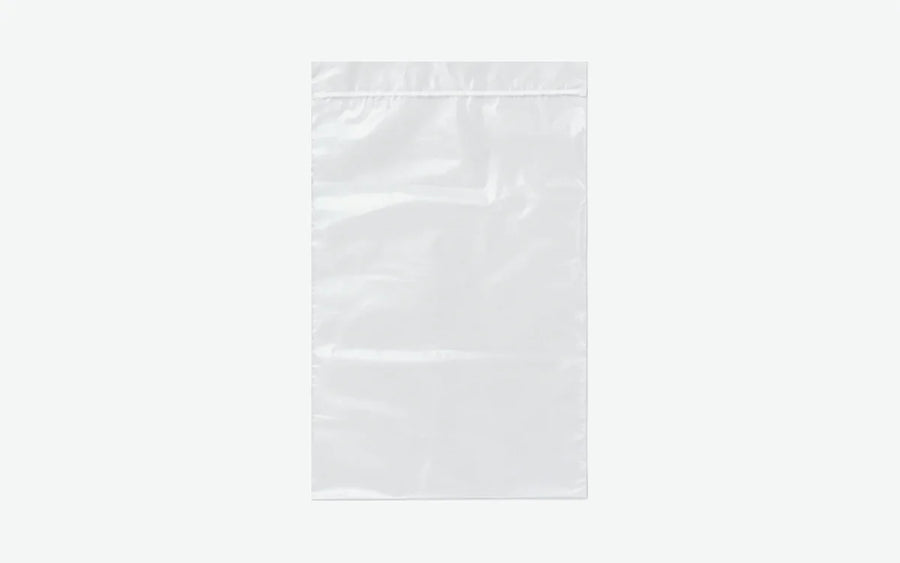
The right poly bag for clothing depends on three things: how the garment is folded, how it travels and who opens the bag at the end. For most folded garments a clear self-seal bag of 40–60 microns in LDPE or PP does the job; heavier items, hanging garments and parcels sent straight to consumers need a different construction. This guide takes you garment by garment, from film and thickness to warning text, recycling marks and logo printing, so you can write a bag specification your factory and warehouse can follow.
Start with the garment, not the bag
Before you choose film or print, answer four practical questions for each product group:
- Folded or hanging? Folded garments go into flat bags; jackets, suits and dresses often travel on hangers and need a cover with a hanger opening.
- Folded size and depth. Measure the garment after folding, including the cardboard insert or tissue if you use one.
- Where is the bag opened? In a shop backroom, at a marketplace warehouse or by your customer at home.
- Will it be reused? A zip-lock bag for socks or swimwear is often kept by the customer; a factory polybag is usually discarded at the store.
Bag types used in clothing packaging
Flat self-seal bag (lip and tape)
The workhorse of garment packing. A flat bag with an extended flap carrying a strip of adhesive under a release liner: the packer slides the garment in, peels the liner and folds the lip over. It suits T-shirts, shirts, knitwear, trousers and kidswear. A permanent adhesive shows tampering; a resealable adhesive lets shops re-pack after try-ons.
Zip-lock and slider bags
A press-to-close zip or a slider closure turns the bag into packaging the customer keeps. Zip lock bags with a printed logo are popular for underwear, socks, swimwear, baby sets, accessories and spare buttons or repair kits. A frosted or matt surface makes it look like part of the product.
Bags with hanger hole or header
A punched round hole or a euro slot in a reinforced header lets the packed item hang on a peg in retail. This is common for packs of socks, tights, underwear and accessories sold on display walls.
Garment covers for hanging clothes
Long, thin covers with an opening at the top for the hanger hook, open or sealed at the bottom, protect suits, coats and dresses on the rail and during transport. They use lighter film because they protect against dust, not parcel handling.
Mailer bags
Opaque co-extruded mailers (white or coloured outside, grey or black inside) ship directly to consumers. They carry a strong permanent seal, often a second peel strip for returns, and are thicker than inner bags.
Film choice: LDPE, PP and recycled content
LDPE (low-density polyethylene) is soft, flexible and tough. It does not crackle loudly, resists puncture from hangers and zip pullers and is the usual material for self-seal bags, garment covers and mailers. PP and CPP (cast polypropylene) are crystal-clear and stiffer, giving a glossy, shop-window look that shows colours and hang tags sharply; they feel crisper and tear more easily once nicked.
Recycled LDPE content is increasingly asked for. Post-consumer recycled film can show slight haze, small specks or a grey tint, so allow for that in your look-and-feel brief, or use recycled content mainly in mailers and opaque bags where clarity matters less. If you need GRS-certified recycled material, ask us which options are available for your bag specification.
For recyclability, keep the bag mono-material: one polymer family throughout, including the adhesive strip and the zip where possible.
Thickness in microns per garment
Bag thickness is specified in microns (µm, thousandths of a millimetre). Too thin and it punctures on a zip; too thick and you store plastic you do not need. The values below are typical starting points for clear inner bags; mailers are a separate category.
| Garment | Typical bag size (W × L, mm) | Typical thickness | Notes |
|---|---|---|---|
| Socks, underwear, small accessories | 150 × 200 to 200 × 250 | 30–40 µm | Zip-lock or header bag with hanger hole |
| T-shirts, tops, kidswear | 250 × 350 to 300 × 400 | 40–50 µm | Self-seal, often with vent holes |
| Shirts, blouses | 300 × 400 to 350 × 450 | 40–50 µm (PP for gloss) | Allow for collar insert and board |
| Knitwear, hoodies, sweatshirts | 350 × 450 to 400 × 500 | 50–60 µm | Extra width for fold depth |
| Jeans, trousers, workwear | 350 × 450 to 400 × 550 | 50–60 µm | Metal buttons and rivets need tougher film |
| Jackets, outerwear (folded) | 450 × 600 to 550 × 700 | 60–80 µm | Zips and toggles can puncture thin film |
| Garment covers (hanging) | 600 × 1,000 to 600 × 1,500 | 15–25 µm | Dust protection on rails |
| Mailer bags (to consumer) | By parcel size | 60–80 µm and up | Opaque co-extruded film, permanent seal |
A simple rule for sizing: add the folded depth of the garment to both width and length, plus 20–30 mm for easy filling and the closure. Test one bag of each size on a real production piece before you order the full run.
Warning text and recycling marks
Suffocation warning
A printed suffocation warning is standard practice on clothing poly bags. There is no single EU-wide wording that we could verify, but many retailers and marketplaces require a warning on bags above a certain opening size, typically with a minimum font size that grows with the bag. A common wording is: Warning: to avoid danger of suffocation, keep this bag away from babies and children. Do not use in cribs, beds, carriages or playpens. Brands selling across Europe usually print it in several languages, or in the languages of their main markets, in a clearly visible position on the face of the bag. Always check the packing manual of each retailer you supply, as wording, languages and font size are often specified there.
Material and sorting marks
Material identification numbers, such as 4 for LDPE and 5 for PP with the abbreviation underneath, tell sorters and consumers what the bag is made of. Several EU countries also require or encourage national sorting marks and instructions on packaging sold to consumers, with France the best-known example. The EU Packaging and Packaging Waste Regulation (EU) 2025/40 will introduce harmonised sorting labels, expected to apply from August 2028 at the earliest. Until then, keep a clean area on the bag artwork for material and sorting marks so you can update them without redesigning the whole bag.
Vent holes, hanger holes and closures
Garments packed after pressing or shipped through humid regions can trap moisture inside a sealed bag, which leads to musty smells or, in the worst case, mould. Small punched vent holes, often half-moon or round holes near the bottom, let air out and also make it easier to stack and compress cartons. Some buyers ask for them by default.
Specify the closure as precisely as the size: lip width, permanent or resealable adhesive, single or double strip, zip or slider, and whether the opening is on the short or long side.
Tip: put one poly bag specification sheet per product group into your trim pack: size, film, micron, closure, vent holes, print position and warning languages. Garment factories then pack identically season after season, and a reorder is a matter of confirming quantities.
Logo printing on poly bags
Poly bags are usually printed by flexographic printing, which suits one or two colours very well: a logo, a website and the warning text. Clear film with a single dark colour looks clean; white ink on clear or frosted film gives a premium effect; a solid white underlay lets coloured logos stay bright on clear film. Keep fine lines generous, as film moves more than paper during printing.
Plan the print position around the garment: the logo should not sit behind a folded collar or on the flap that disappears when closed. On zip-lock bags, a logo near the closure is visible when the bag is filled. Minimums for printed bags depend on size, film and number of colours, so ask us for your specification.
Stickers, barcodes and size marking on the bag
Most warehouses and retailers identify packed garments through a sticker on the bag rather than the bag print: style number, colour, size, EAN barcode and sometimes a size indicator visible from the front of a stacked shelf. Use one printed bag design for the whole range and add the variable information with a small label. Our stickers and packaging labels are made for this; the article on packaging labels and stickers covers formats and adhesives. If you also mark size on the garment, keep the codes consistent with your size labels.
Folding sizes and packing routine
The bag size follows the fold, so agree a standard fold per product group with your factory before you order bags. Typical folded formats are around 230 × 300 mm for T-shirts, 250 × 350 mm for shirts with a board and 300 × 350 mm for knitwear, though your own fold may differ. Three or four bag sizes can often cover an entire collection.
For e-commerce, think about the full parcel: the garment in its clear bag, wrapped in tissue paper if you want an unboxing moment, a printed thank-you card or packaging insert, and either a mailer bag or a box. For gift and premium lines, see custom boxes for clothing brands.
Ordering poly bags with your labels
Send us the garment types, folded sizes, preferred film and closure, quantities per size and your logo. We suggest thickness and print layout and send a digital artwork proof. Production typically takes 10–20 working days after approval, with delivery across the EU, and you can order bags together with your labels and hang tags so one shipment covers the whole trim pack. See the range of poly bags for the main constructions.
Planning poly bags for a new collection or replacing plain bags with printed ones? Send us your sizes and quantities and request a quote for poly bags matched to your garments.
Frequently asked questions
What is the difference between LDPE and PP poly bags for clothing?
LDPE is soft, flexible and puncture-resistant, so it suits heavy garments, garment covers and mailers. PP and CPP are crystal-clear and stiffer, giving a glossy shop-window look for shirts and knitwear, but they tear more easily once damaged.
Can poly bags be printed with my logo in more than one language for the warning text?
Yes. The logo, website and a multilingual suffocation warning are usually printed together in one or two colours. Tell us your markets and we lay out the languages on the artwork proof.
Do I need vent holes in my clothing bags?
Vent holes are recommended when garments are packed warm after pressing, travel through humid conditions or are packed in large cartons. Some retailers ask for them as standard, so check their packing manual.
What is the minimum order for printed poly bags?
Minimums depend on bag size, film and the number of print colours. Send us your specification and quantities per size and we will advise on the most practical run.
Can poly bags contain recycled plastic?
Yes, recycled LDPE content is possible. It can make clear film slightly hazy, so it is often used in mailers or frosted bags. Ask us which recycled options fit your bag type.
More guides
Washable Leather Labels: How Leather, PU and Jacron Survive Washing
What happens to leather, PU and jacron labels in garment washes and home laundry, and how to specify, sew and test a label that still looks right a...
Read article
Silicone Label Design Rules: Artwork for 2D and 3D Rubber Patches
Line widths, text heights, relief levels, colour separation and file set-up: the artwork rules that make 2D and 3D silicone, PVC and TPU labels mou...
Read article
Composition Label Examples: 12 Templates for Clothing and Textiles
Twelve worked composition label examples, from a cotton T-shirt to a reversible jacket, with ready text and layouts for 1, 5 and 12+ languages.
Read articleTell us about your labels
Send the label type, size, quantity and your deadline. We usually reply within one working day with a price and a recommendation.
- Usual MOQ 1,000 pcs per design
- Samples before production
- Production 10–20 working days
- Delivery across Europe