





Leather Labels & Jeans Patches
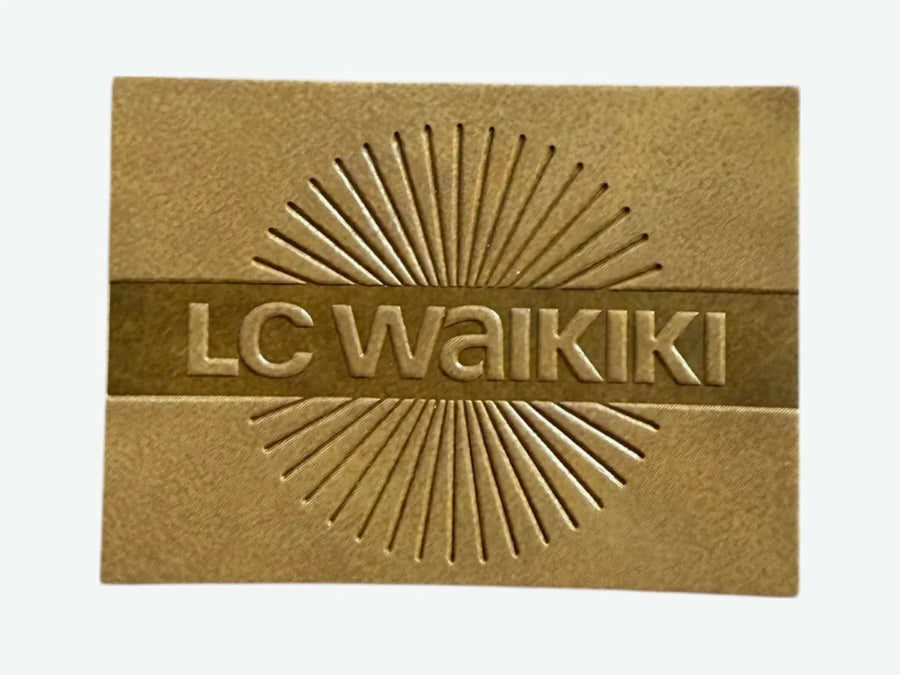
Genuine and faux leather labels and jeans patches – embossed, debossed, engraved or foiled.
- Own productionLabel production in Bulgaria
- 10–20 daysAfter approval
- Proof in 24–48 hExpress design
- OEKO-TEX & GRSRecycled options
- From 1,000 pcsPer design
Why leather labels still matter
A leather label tells the customer, before they read a word, that the garment is built to last. It is the natural finish for denim, workwear, outerwear, knitted hats, bags and home textiles, and it ages with the product instead of wearing out. Today the category includes much more than cowhide: faux leather (PU) and paper-based jacron give the same visual language for vegan collections and tighter budgets.
We cut, mark and finish leather labels and jeans patches in our own production in Bulgaria. Because we run the presses and lasers ourselves, we can advise on what each material can really achieve before you commit to a design.
Materials
Genuine leather
Split or full-grain cowhide, typically 1–2 mm thick, in natural, tan, brown, black and dyed shades. Genuine leather takes deep debossing well and develops a patina over time. As a natural product, every hide varies slightly in grain and colour, which most brands see as part of the appeal. If your garment uses genuine leather parts, remember that EU textile labelling rules require the statement that it contains non-textile parts of animal origin; our EU labelling guide explains this.
Faux leather (PU)
Polyurethane-coated material with a leather-like grain. PU is more uniform in colour and thickness from batch to batch, is available in a wide colour range including metallic and pastel tones, and is usually more cost-effective than genuine leather. It is the standard choice for vegan positioning.
Jacron (paper leather)
A dense, cellulose-based board with a leather look, traditionally used for jeans back patches. It prints and debosses cleanly and is light and economical. Untreated jacron can soften, wrinkle or lose definition after repeated washing, so for garments washed often we recommend a washable, polymer-reinforced grade or PU.
Decoration methods
- Debossing: the logo is pressed into the surface with a heated metal die. The most classic leather look, clear without any ink.
- Embossing: the logo is raised from the surface, giving a sculptural, premium effect on thicker materials.
- Laser engraving: a laser burns fine detail into the surface, producing a darker, slightly smoky contrast. No die is required, which suits short runs and detailed artwork.
- Hot-foil stamping: gold, silver, copper or coloured foil pressed into the debossed area for strong contrast.
- Printing: screen or digital print for multicolour logos, mainly on PU and jacron.
Edges and shapes
Labels can be cut straight, with rounded corners, or die-cut to any outline. Edge options include a clean raw cut, laser-cut edges with a slightly sealed finish, painted or burnished edges for a refined look, and a stitched border debossed into the material. A punched hole or a pre-stitched line can be added for tags or for easier sewing.
Typical sizes
The formats below cover most applications. We also produce custom sizes and shapes.
| Size (mm) | Thickness (mm) | Typical use |
|---|---|---|
| 30 × 20 | 1–1.2 | Beanies, caps, small accessories |
| 40 × 25 | 1–1.5 | Knitwear, scarves, hems |
| 50 × 30 | 1–1.5 | Jackets, shirts, bags |
| 60 × 40 | 1.2–2 | Outerwear, workwear, home textiles |
| 70 × 50 | 1.2–2 | Jeans back patches, chinos |
| 80 × 60 | 1.5–2 | Jeans back patches, workwear trousers |
| 90 × 60 | 1.5–2 | Large jeans patches, bags, luggage |
Not sure which proportion fits your waistband or hem? Our label size guide helps you decide.
Jeans back patches
The waistband patch is the most visible label on a pair of jeans. Typical patches measure 70 × 50 to 90 × 60 mm and are stitched on along all four sides, just above the right back pocket. Debossing with or without foil is the classic treatment; laser engraving gives a more vintage look. If your jeans go through stone, enzyme or bleach washes, tell us the wash recipe: we will recommend a material that keeps its shape and colour after garment finishing.
Tip: test one patch on a finished garment through your full washing process before bulk production. Genuine leather and PU behave differently under heat and chemicals, and a quick test avoids surprises.
Care and washing
Genuine leather labels may darken slightly or stiffen after many hot washes; PU and washable jacron are more stable. For everyday garments we suggest washing at 30–40 °C, inside out, and avoiding direct ironing on the label. Our raw materials are OEKO-TEX certified.
Ordering, MOQ and lead time
Send us your logo, preferred material and size. Our express label design team prepares the artwork and a digital proof, typically within 24–48 h. The minimum order is usually 1,000 pcs per design. A physical sample can be made before production so you can check the material and finish. After approval, production typically takes 10–20 working days, delivered anywhere in the EU without customs procedures, with express options on request.
Leather labels pair well with metal labels on bags and outerwear and with woven labels inside the garment. For a softer, waterproof alternative see our silicone labels. Browse finished examples in our Labels 2026 catalogue on the catalogues page.
Tell us the garment, wash process and look you want, and we will suggest the right leather or alternative. Request a quote from our production team.
Frequently asked questions
Should I choose genuine leather or faux leather labels?
Genuine leather gives a natural grain and patina and takes deep debossing. Faux leather (PU) is more uniform in colour, available in more shades, usually more cost-effective and suitable for vegan collections.
Are jacron jeans patches washable?
Standard jacron can soften or wrinkle after repeated washing. For frequently washed garments we recommend a washable, polymer-reinforced grade or PU, and a test through your wash process.
What sizes are typical for jeans back patches?
Most jeans back patches measure between 70 × 50 and 90 × 60 mm and are 1.2–2 mm thick. Custom sizes and shapes are possible.
What is the difference between embossing, debossing and laser engraving?
Debossing presses the logo into the surface and embossing raises it, both with a metal die. Laser engraving burns the design into the surface without a die and gives a darker contrast with fine detail.
What is the minimum order for leather labels?
The minimum order is usually 1,000 pcs per design, and a physical sample can be made before production.

Get a price for leather labels
Tell us what you need. We reply within 24 h on working days with a price and a recommendation.
Tell us about your labels
Send the label type, size, quantity and your deadline. We usually reply within one working day with a price and a recommendation.
- Usual MOQ 1,000 pcs per design
- Samples before production
- Production 10–20 working days
- Delivery across Europe