





Labels for Shoes: Insole, Tongue, Heel and Material Marking Labels
Labels for shoes have to do more than carry a logo. A footwear label is bent with every step, rubbed by the foot, exposed to sweat, rain and glue, and often has to show the materials of the shoe in a standard pictogram format. Whether you make trainers, leather shoes, boots, slippers or children's footwear, the right combination of tongue labels, heel tabs, insole prints and box labels gives your brand a clear presence and keeps the product correctly marked. As a label manufacturer in Europe, we produce woven, printed, leather, metal and silicone labels as well as stickers for footwear brands. This guide walks through each position on the shoe.
Where labels go on a shoe
Footwear offers fewer flat surfaces than a garment, so every label position has its own technical demands.
| Position | Typical label | Typical size | Attachment |
|---|---|---|---|
| Tongue (outside) | Woven label, leather or silicone badge | 20×30 to 40×50 mm | Stitched before lasting |
| Tongue (inside) | Printed or woven label with size and article data | 20×40 to 30×60 mm | Stitched or heat-applied |
| Heel tab / pull loop | Woven tape, woven label, leather tab | 10–25 mm wide | Stitched into the heel seam |
| Side or quarter | Metal emblem, silicone badge, leather patch | 15–40 mm | Prongs, rivets, stitching, adhesive |
| Insole / sock lining | Printed logo, heat transfer, embossing | 30×15 to 60×30 mm | Printed or transferred before assembly |
| Shoe box | Box label with size, colour, barcode | 70×40 to 100×50 mm | Self-adhesive |
Tongue labels
The tongue is the classic branding position on trainers and casual shoes. A woven tongue label in damask or satin quality gives fine detail and a soft, flexible feel; it is usually sewn on the outside of the tongue before the upper is lasted. For a more three-dimensional look, brands use silicone badges or leather patches embossed or debossed with the logo. Inside the tongue, a printed or woven label often carries size, article number and production data. For more on woven qualities, see our woven labels.
Practical tips for tongue labels
- Keep the label slightly smaller than the flat area of the tongue, so the stitching does not run into curves.
- Choose ultrasonic or heat-cut edges, which stay sealed when the tongue flexes.
- Use colourfast yarns and a backing that tolerates the adhesives and heat used in shoe assembly.
Heel tabs and pull loops
A heel tab is both functional and highly visible. Woven tapes with a repeated logo, narrow woven labels folded into a loop, or leather tabs with a debossed logo are the most common options. Typical widths are 10–25 mm. Because the loop is pulled every time the shoe is put on, the material has to be strong: dense polyester woven tape or a firm leather works best. Our woven tapes and ribbons can be woven with your logo along the whole length.
Leather and metal labels for footwear
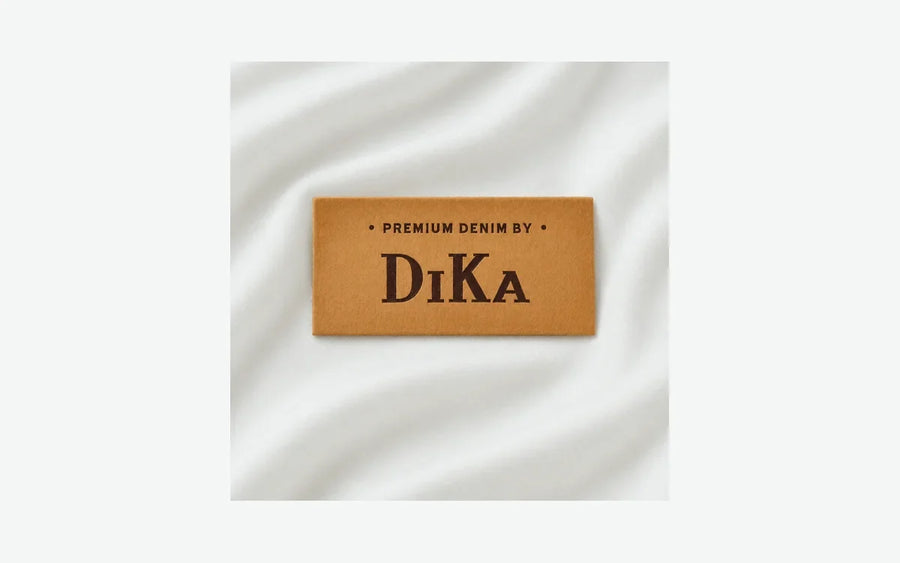
Leather patches suit boots, casual shoes and work shoes. They can be genuine or faux leather, embossed, debossed, laser-engraved or foil-printed, and are usually stitched to the upper or the tongue. Typical sizes for footwear are smaller than for jeans, for example 30×20 or 40×25 mm. See our leather labels for materials and finishes.
Metal emblems and plates give a premium accent on the side of a boot, on a lace keeper or on a strap. They are made in zinc alloy, brass, aluminium or stainless steel and attached with prongs, rivets or stitch holes. All our metal labels are nickel-free; "nickel" appears only as a colour finish name. Explore metal labels for shapes and finishes.
Insole branding
The insole or sock lining is the place every customer sees when they look into the shoe. Common options are:
- Printed logos applied to the sock lining before assembly, in one or several colours.
- Heat transfer labels, which bond to textile or synthetic linings and give a smooth, tagless finish.
- Embossing or foil stamping on leather and leather-look insoles.
- Small woven labels sewn into the edge of removable insoles.
Insole prints are under constant friction and moisture, so ink and transfer adhesives must be chosen for abrasion resistance. Ask for samples so you can test the print on your actual lining material. Our heat transfer labels are a good starting point for synthetic and textile linings.
Material marking for shoes in the EU
Footwear sold in the EU is subject to Directive 94/11/EC on the labelling of materials used in the main components of footwear. In general terms, it requires information on the material of three parts of the shoe:
- the upper,
- the lining and sock (insole lining),
- the outer sole.
For each part, the material is indicated with standard pictograms or written words for four material categories: leather, coated leather, textile (natural and synthetic) and other materials. The information refers to the material that makes up the large majority of the part; where no single material dominates, the main materials are given. The marking has to appear on at least one shoe of each pair and can be printed, embossed, stuck on or attached as a label, as long as it is legible, durable and accessible. Retailers also have to explain the pictograms to consumers in the shop.
In practice, many brands use a small printed or woven label inside the tongue or on the lining with the three part pictograms and the material symbols next to them, sometimes combined with size and article data. As with any regulation, check the details for your product type and target markets with your compliance adviser; we produce the label to your approved content.
Tip: the pictogram system is language-neutral, so one material label can serve all your EU markets. Keep it on a separate small label or print area, and add your size and article data next to it rather than mixing it into the brand label.
Shoe box labels and packaging
The shoe box is where warehouses and shops identify the product. A self-adhesive box label typically shows article number, colour, size (often in several size systems), barcode and the brand logo. Box labels are printed on paper or film stickers in sizes such as 70×40 or 100×50 mm, and can be supplied with variable data per size. Matching tissue paper and a branded sticker to seal it complete the unboxing. See our stickers and packaging labels.
Durability requirements for footwear labels
Shoe labels face conditions that garment labels rarely meet: heat and solvents during lasting and sole bonding, constant flexing, abrasion from the foot and moisture from sweat and weather. When you specify labels for shoes, consider:
- Heat resistance of yarns, coatings and silicone during sole pressing.
- Colourfastness to sweat and water, especially for light-coloured linings.
- Edge finish: sealed edges that do not fray when the material flexes.
- Flexibility: thin, soft labels on tongues and linings; rigid badges only on stable areas.
- Safety: OEKO-TEX Standard 100 certified label materials, which are particularly relevant for children's footwear.
Ordering labels for shoes
Send us your logo, the positions you want to brand and the materials of your uppers and linings. Our designers prepare a digital proof typically within 24–48 h, and physical samples are available before production so you can test them in your shoe factory. The minimum order is typically 1,000 pcs per design, and production typically takes 10–20 working days after approval, with delivery across the EU.
Developing a footwear collection? A dedicated contact person supports you at every step, from tongue labels and heel tabs to material pictograms and box labels. Request a quote for your shoe labels.
Frequently asked questions
What labels does a shoe need?
Most shoes have a branding label on the tongue or heel, a label or print with size and article data, the material marking for upper, lining and sole, and a box label. Badges on the side or insole prints are optional branding.
What are the material pictograms on shoes?
Under Directive 94/11/EC, footwear in the EU shows the material of the upper, the lining and sock, and the outer sole using standard pictograms for leather, coated leather, textile and other materials.
Where is the material label placed on a shoe?
The marking must appear on at least one shoe of each pair and be legible and accessible. It is often printed or placed as a small label inside the tongue or on the lining.
Which label types are suitable for heel tabs?
Dense woven tapes with a repeated logo, folded woven labels and leather tabs work well, as they withstand being pulled every time the shoe is put on.
Can you make metal badges for shoes and boots?
Yes. We make metal emblems and plates in zinc alloy, brass, aluminium or stainless steel with prongs, rivets or stitch holes. All our metal labels are nickel-free.
More guides

Damask vs Satin vs Taffeta Woven Labels: Weaves Compared
How damask, HD damask, satin and taffeta woven labels differ in thread density, detail, hand feel and durability, and which weave suits your garments.
Read article
Label Edge Finishes: Ultrasonic, Laser, Heat Cut and Woven Edges
Ultrasonic, laser, hot knife, woven selvedge, merrow or folded: how each label edge finish is made, how it feels on the skin and where to use it.
Read article
Labels for Knitwear: Soft Labels, Placement and Care for Wool and Cashmere
Knitwear needs labels that are soft, flexible and correctly placed: a guide to label materials, folds, placement and care content for wool and cash...
Read articleTell us about your labels
Send the label type, size, quantity and your deadline. We usually reply within one working day with a price and a recommendation.
- Usual MOQ 1,000 pcs per design
- Samples before production
- Production 10–20 working days
- Delivery across Europe