





Labels for Private Label Clothing: How to Brand Garments Made by a Factory
Private label is one of the fastest ways to build a clothing brand: a garment factory produces the product, and you sell it under your own name. What turns a factory garment into your product is branding, and most of that branding sits on labels. This guide explains which private label clothing labels you need, how to coordinate them with private label manufacturers and garment factories, how to calculate quantities per style and size, and how to time the order so labels are waiting when sewing starts.
What private label means for your labels
In a private label model, the garment factory handles fabric, cutting and sewing, while the brand owns the design identity. The factory may offer generic labels, but your own labels are what make the product recognisably yours and legally correct for your market. You decide the look of the brand label, the content of the care label and the information on the hang tag. Ordering your labels separately from your label producer gives you one consistent label set across every factory you work with, now and in future.
The private label clothing label set
Brand label
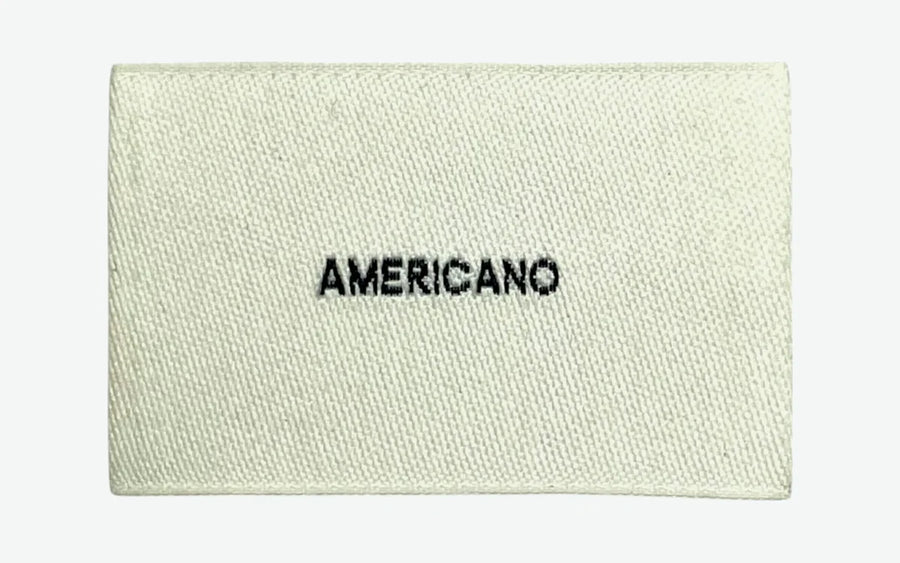
The main label with your logo, usually a woven label at the neck or waistband, or a tagless heat transfer for T-shirts and sportswear. Using one brand label across all styles keeps orders simple.
Care and composition label
Under Regulation (EU) No 1007/2011, fibre composition must be shown in the language of each country where the garment is sold. The brand placing the product on the market is responsible for this information, so check the composition with your factory and order care labels with the correct content per fabric. Read EU care label requirements for details.
Size labels
Size tabs, or sizes printed on the care label. Decide which system you use (letter, numeric, EU or international) and keep it consistent across factories.
Hang tags and stickers
Hang tags carry your brand story, style number and barcode. Barcode and size stickers on the tags or polybags help retailers and warehouses. See packaging labels and stickers.
Accent branding
Leather patches for jeans, metal plates for outerwear and bags, silicone labels for sportswear or small woven flags on hems give the product a signature detail visible from the outside.
Working with garment factories
Agree who supplies what
Before ordering, confirm in writing which labels you supply and which the factory supplies. A common split: the brand supplies brand labels, care labels, size labels and hang tags; the factory supplies sewing thread, polybags and cartons. Clear responsibility avoids missing labels on the sewing line.
Share a label placement sheet
Give the factory a tech-pack page that shows each label's position, fold, stitching and orientation: for example, brand label centre back neck, size label to the left of it, care label in the left side seam 10 cm above the hem. Our guide on clothing label placement helps you define this.
Send labels to the factory
We can ship your labels straight to your garment factory anywhere in the EU, with cartons marked with your brand name, style numbers and the factory's purchase order reference. Pack size labels and care label variants separately and label them clearly, so the sewing room picks the right one without guessing.
Several factories, one label set
Many private label brands use different factories for knitwear, denim and outerwear. Ordering all labels from one label producer keeps logos, colours and care formats identical across factories, and your specifications are stored for repeat orders.
Quantities per style and size
Label quantities follow your production plan. Calculate per style, fabric and size, then add a small buffer, typically a few per cent, for sewing losses and reorders.
| Label | Quantity driver | Example: 3 styles × 600 pcs, sizes S–XL |
|---|---|---|
| Brand label | Total garments (one design for all styles) | 1,800 + buffer, one design |
| Care label | One version per fabric composition | 2 fabrics: 1,200 + 600, two designs |
| Size label | One design per size, split by size curve | 4 sizes split by expected sales |
| Hang tag | Total garments; variable data by sticker | 1,800 + buffer, one design |
| Barcode stickers | One per SKU (style × colour × size) | Printed per SKU |
The minimum order is typically 1,000 pcs per design. To reach it comfortably, keep designs shared across styles: one brand label, care labels grouped by fabric, and sizes printed on the care label if the split per size is small. See woven labels minimum order for more ideas.
Timing your label order
Labels must arrive at the factory before cutting finishes and sewing begins. Work backwards from the factory's sewing start date:
- Brief and artwork: send logo, content and quantities; digital proof typically within 24–48 h.
- Approval and sample: approve the proof; physical samples are available if you want to check the feel and colour on the real fabric.
- Production: typically 10–20 working days after approval.
- Delivery to the factory: shipping across the EU, plus a few days of buffer for receiving.
A good rule is to place the label order when the factory confirms the production slot, not when fabric arrives.
Tip: ask your factory for its exact delivery address, receiving hours and the name of the person who handles trims. Put the factory's purchase order number on every carton.
Common private label pitfalls to plan for
- Composition changes: factories sometimes switch to a similar fabric with a different blend. Ask the factory to confirm the final composition before you approve care label proofs.
- Size curve surprises: if the factory produces more of one size than planned, size labels run short. Order a slightly larger buffer on the best-selling sizes.
- Multiple markets: selling in several EU countries means more languages on the care label. Decide your markets before ordering, or use a multilingual care label from the start; see label language requirements in the EU.
- Late artwork: a logo change after approval restarts the proof. Finalise brand artwork before the first order.
Working with private label manufacturers is easier when your label specifications are documented once and reused. After the first order, your artwork, sizes, folds and colours are stored, so a reorder for a new production run is a short confirmation rather than a new project.
Private label checklist
- Vector logo and brand colours (Pantone references)
- List of styles, fabrics and compositions per style
- Care instructions per fabric and languages per market
- Size system and quantities per size
- Label placement sheet for the factory
- Hang tag content, barcodes or SKU list
- Agreement on who supplies which labels and trims
- Factory delivery address, contact and PO reference
- Target sewing start date
Building a brand that lasts
Your labels stay with you even if you change factories. Investing in a well-designed, consistent label set means each new production run looks like the same brand. For the essentials of a first collection, see the starter label kit.
Producing under your own brand? Send us your styles, quantities and factory details, and a dedicated contact person supports you at every step until the labels arrive at your factory. Request a quote for private label clothing labels.
Frequently asked questions
What labels does a private label clothing brand need?
A brand label, care and composition labels, size labels and hang tags, plus optional accent labels, patches and packaging stickers.
Can you send labels directly to my garment factory?
Yes. We ship labels to garment factories across the EU, with cartons marked with your brand, style numbers and the factory purchase order reference.
Who is responsible for the care label content?
The brand placing the product on the market. Confirm fibre composition with your factory and provide care instructions per fabric in the languages of your markets.
How many labels should I order per style?
One per garment plus a small buffer, typically a few per cent. Size labels follow your size curve, and care labels are needed per fabric composition.
When should I order labels for private label production?
As soon as the factory confirms the production slot. Production typically takes 10–20 working days after approval, plus delivery to the factory.
More guides

Damask vs Satin vs Taffeta Woven Labels: Weaves Compared
How damask, HD damask, satin and taffeta woven labels differ in thread density, detail, hand feel and durability, and which weave suits your garments.
Read article
Label Edge Finishes: Ultrasonic, Laser, Heat Cut and Woven Edges
Ultrasonic, laser, hot knife, woven selvedge, merrow or folded: how each label edge finish is made, how it feels on the skin and where to use it.
Read article
Labels for Knitwear: Soft Labels, Placement and Care for Wool and Cashmere
Knitwear needs labels that are soft, flexible and correctly placed: a guide to label materials, folds, placement and care content for wool and cash...
Read articleTell us about your labels
Send the label type, size, quantity and your deadline. We usually reply within one working day with a price and a recommendation.
- Usual MOQ 1,000 pcs per design
- Samples before production
- Production 10–20 working days
- Delivery across Europe